Raman spectroscopy of over-the-counter pharmaceuticals and supplements
Samples: whey protein, creatine monohydrate, vitamin C, multivitamin, ibuprofen, paracetamol Tools: Lightnovo miniRaman spectrometer equipped with contact probe, Lightnovo Miraspec software.
INTRODUCTION
Raman spectroscopy is a very powerful tool for the analysis and identification of various chemical substances. Raman spectroscopy is widely used in the pharmaceutical industry during analysis of raw materials, quality control, as well as in pharmaceutical R&D. In this application note we are demonstrating the use of Lightnovo’s compact handheld miniRaman spectrometer for the analysis and identification of several different over-the-counter medicines, health supplements such as vitamins, and bodybuilding supplements.
SAMPLES AND SAMPLE PREPARATION
We have chosen the following samples for our experiments: whey protein powder (with vanilla flavour), creatine monohydrate, ibuprofen, paracetamol, vitamin C, multivitamin.
The samples were obtained from the following sources:
- Ordered online on amazon.de (whey protein and creatine monohydrate)
- Purchased in Føtex supermarket in Birkerød, Denmark (vitamin C and multivitamin)
- Purchased in Føtex supermarket pharmacy in Birkerød, Denmark (ibuprofen and paracetamol)
Protein and creatine monohydrate samples were received in powder, and used as received. Vitamin C, multivitamin, ibuprofen and paracetamol were received in tablets. The tablets were crushed into powder with mortar and pestle. The powders were then placed into plastic bags. The samples in plastic bags are shown in Figure 1
Figure 1. The samples used for the measurement.
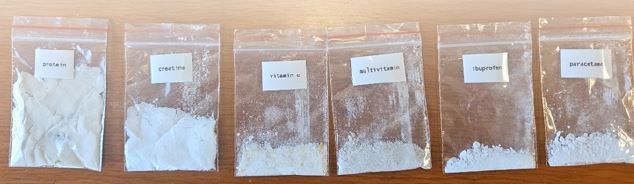
Table 1. Summary of the samples used, sources of the samples, as well as sample preparation procedures.
| Sample | Category | Source | Additional sample preparation procedure? |
|---|---|---|---|
| Whey protein | bodybuilding | amazon.de | No, used as received |
| Creatine | monohydrate | amazon.de | No, used as received |
| Ibuprofen | over-the-counter | Føtex supermarket | Yes, crushed into powder with mortar and pestle |
| Paracetamol | over-the-counter | Føtex supermarket | Yes, crushed into powder with mortar and pestle |
| Vitamin C | vitamins | Føtex supermarket | Yes, crushed into powder with mortar and pestle |
| Multivitamin | vitamins | Føtex supermarket | Yes, crushed into powder with mortar and pestle |
MEASUREMENT PROCEDURE
The Raman spectra of the samples were collected through the plastic bag using mini Raman equipped with the contact probe as shown in Figure 2. The working distance of the contact probe was 80..120 um, due to confocality of the system, this allows it to collect the signal from the powder inside the plastic bag without interference from the plastic bag itself. Each sample was measured at least three times at different locations to ensure the reproducibility of Raman data.
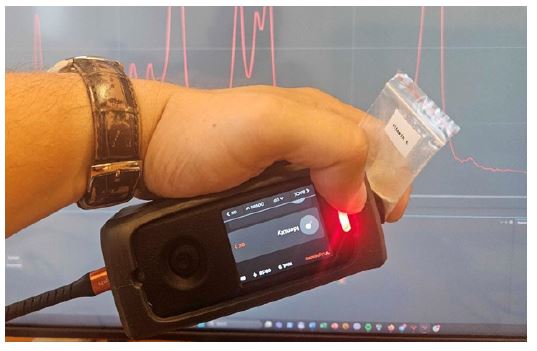 Figure 2. Measurement with Lightnovo miniRaman spectrometer: measurement of the vitamin C sample through a plastic bag with mini Raman spectrometer equipped with the contact probe. Live Raman spectrum of vitamin C in Miraspec software is displayed in the background.
Whey protein
Whey protein is a mixture of proteins isolated from whey, the liquid material created as a byproduct of cheese production. The proteins consist of α-lactalbumin, β-lactoglobulin, serum albumin and immunoglobulins. Glycomacropeptide also makes up the third largest component but is not a protein. The primary usage of whey protein supplements is for muscle growth and development. [1, 2]
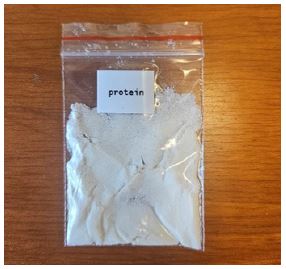
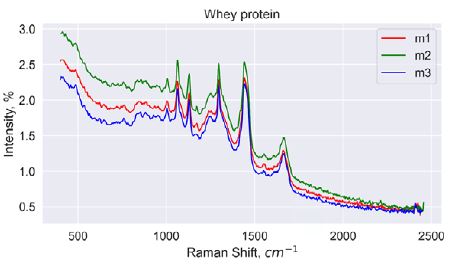
Figure 3. Whey protein sample in a plastic bag.
Figure 4. Raman spectra of whey protein sample measured through the plastic bag at different spots
Creatine monohydrate
Creatine monohydrate is used as a sports supplement. Creatine is proven to boost the recovery and work capacity of an athlete. Creatine use can increase maximum power and performance in high-intensity anaerobic repetitive work (periods of work and rest) by 5% to 15%. Creatine has no significant effect on aerobic endurance, though it will increase power during short sessions of high-intensity aerobic exercise. [3, 4]
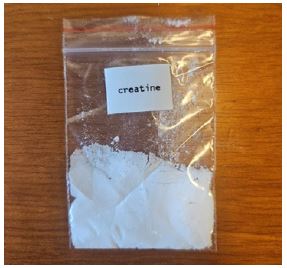
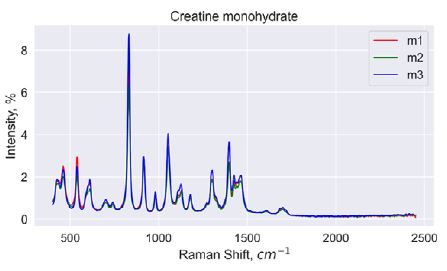
Figure 5. Creatine monohydrate sample in a plastic bag.
Figure 6. Raman spectra of creatine monohydrate sample measured through the plastic bag at different spots
Ibuprofen
Ibuprofen is a nonsteroidal anti-inflammatory drug (NSAID) that is used to relieve pain, fever, and inflammation. It can be taken orally (by mouth) or intravenously. It typically begins working within an hour. [5, 6]
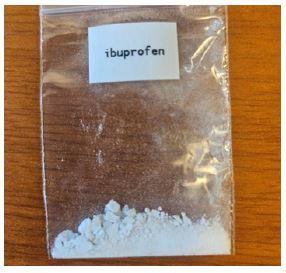
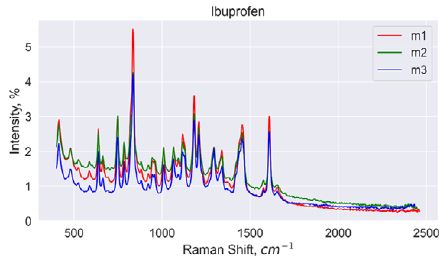
Figure 7. Ibuprofen sample in a plastic bag
Figure 8. Raman spectra of ibuprofen sample measured through the plastic bag at different spots
Paracetamol
Paracetamol (acetaminophen) is a non-opioid analgesic and antipyretic agent used to treat fever and mild to moderate pain. It is a widely used over-the-counter medication. Common brand names include Tylenol and Panadol. At a standard dose, paracetamol slightly reduces fever; it is inferior to ibuprofen in that respect, and the benefits of its use for fever are unclear, particularly in the context of fever of viral origins. Paracetamol relieves pain in both acute mild migraine and episodic tension headache. [7, 8]
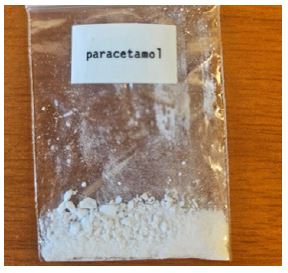
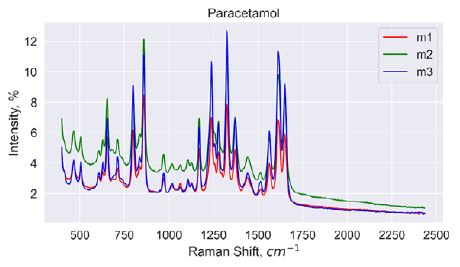
Figure 9. Paracetamol sample in a plastic bag
Figure 10. Raman spectra of paracetamol sample measured through the plastic bag at different spots
Vitamin C
Vitamin C (also known as ascorbic acid and ascorbate) is a water-soluble vitamin found in citrus and other fruits, berries and vegetables. It is also a generic prescription medication and in some countries is sold as a non-prescription dietary supplement. As a therapy, it is used to prevent and treat scurvy, a disease caused by vitamin C deficiency. Vitamin C is an essential nutrient involved in the repair of tissue, the formation of collagen, and the enzymatic production of certain neurotransmitters. It is required for the functioning of several enzymes and is important for immune system function. It also functions as an antioxidant. Vitamin C may be taken by mouth or by intramuscular, subcutaneous or intravenous injection. [9, 10]
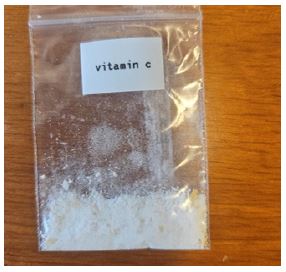
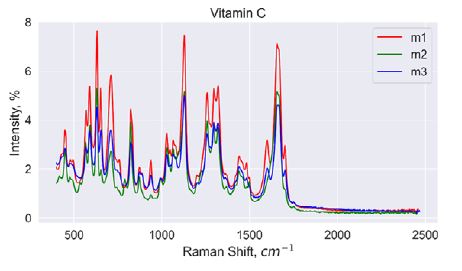
Figure 11. Vitamin C sample in a plastic bag
Figure 12. Raman spectra of vitamin C sample measured through the plastic bag at different spots
Multivitamin
A multivitamin is a preparation intended to serve as a dietary supplement with vitamins, dietary minerals, and other nutritional elements. Such preparations are available in the form of tablets, capsules, pastilles, powders, liquids, or injectable formulations. Many multivitamin formulas contain vitamin C, B1, B2, B3, B5, B6, B7, B9, B12, A, E, D2 (or D3), K, potassium, iodine, selenium, borate, zinc, calcium, magnesium, manganese, molybdenum, beta carotene, and/or iron. Multivitamins are typically available in a variety of formulas based on age and sex. [11, 12]
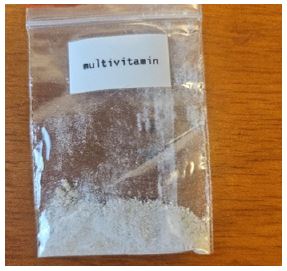
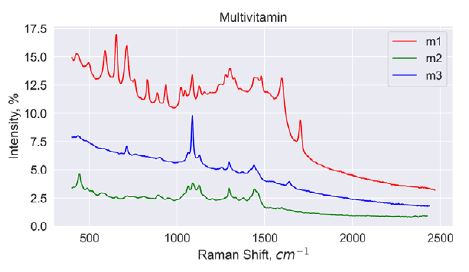
Figure 13. Multivitamin sample in a plastic bag
Figure 14. Raman spectra of multivitamin sample measured through the plastic bag at different spots
IDENTIFICATION OF SAMPLES
For each compound we have selected one spectrum to be used for the library and another spectrum used as an “unknown” compound to be identified. The identification was performed using the Data Analyser of the Lightnovo Miraspec software. The correlations between the experimental spectrum and the library spectra were calculated using Pearson correlation technique in the spectral range of 400..2000 cm-1 and the HQI (hit quality index) was obtained as a result. The best match from the library was then selected. The spectra of the samples to be identified and the library spectra are summarized in Figures 15-19. The multivitamin sample was not used for identification due to its inhomogeneity and hence the very strong variation of the Raman spectrum across the sample. The results are summarized in Table 2.
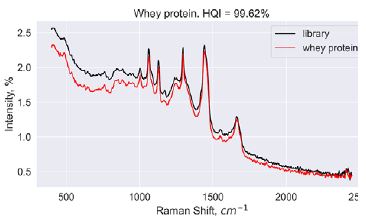
Figure 15. Raman spectrum of whey protein sample versus library spectrum
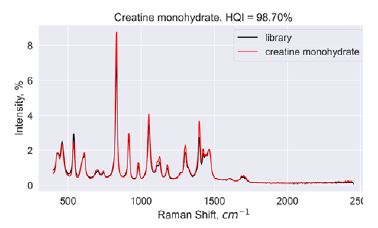
Figure 16. Raman spectrum of creatine monohydrate sample versus library spectrum
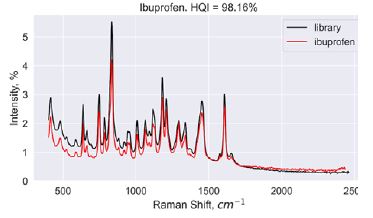
Figure 17. Raman spectrum of ibuprofen sample versus library spectrum
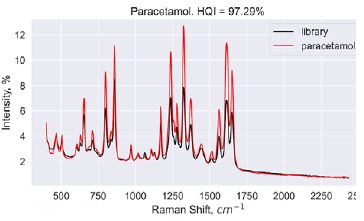
Figure 18. Raman spectrum of whey Paracetamol sample versus library spectrum
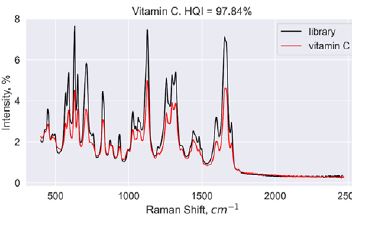
Figure 19. Raman spectrum of vitamin C sample versus library spectrum
Table 2. The results of identification of the samples.
| Sample | Identified correctly? | HQI, % | Comments |
|---|---|---|---|
| Whey protein | Yes | 99.62 | - |
| Creatine monohydrate | Yes | 98.70 | - |
| Ibuprofen | Yes | 98.16 | - |
| Paracetamol | Yes | 97.29 | - |
| Vitamin C | Yes | 97.84 | - |
| Multivitamin | No | - | The sample is inhomogeneous due to presence of grains of various different substances in the sample. |
The correlation matrix (hit quality indices) between the sample spectra and the library spectra is provided in Table 3.
Table 3. HQIs between the sample spectra and library spectra in %.
| Library spectra | ||||||
|---|---|---|---|---|---|---|
| Whey protein | Creatine monohydrate | Ibuprofen | Paracetamol | Vitamin C | ||
| Sample | Whey protein | 99.62 | 53.62 | 70.31 | 47.93 | 47.94 |
| Creatine monohydrate | 46.01 | 98.7 | 59.38 | 15.18 | 24.14 | |
| Ibuprofen | 59.82 | 58.1 | 98.16 | 41.91 | 31.86 | |
| Paracetamol | 28.15 | 6.3 | 33.21 | 97.29 | 39.86 | |
| Vitamin C | 61.18 | 31.84 | 44.35 | 49.35 | 97.84 | |
CONCLUSIONS
In this application note we have shown that Lightnovo’s miniRaman spectrometer is a very powerful tool for the pharmaceutical industry. Raman spectroscopy allows us to identify various different chemicals such as medicines, sports and health supplements, vitamins, etc. The results also imply that the miniRaman spectrometer is also a perfect tool for the law enforcement agencies for illegal drugs identification and analysis. In addition, miniRaman can be used in the field of food safety.
The Raman spectra of the substances were compared to the library spectra of the same substances collected earlier, also with a miniRaman spectrometer. The best matches were identified with high HQI (hit quality index) above 97%. The identification was correct in all the cases except for the multivitamin sample. In the case of the multivitamin, the sample is very inhomogeneous and consists of the grains of multiple different substances. For the analysis of the inhomogeneous samples we can suggest mapping with our Raman microscopes such as miniRaman microscope, but this is out of scope of this application note. We will release another application note on the mapping of tablets and powders containing a mixture of different substances as a follow-up.
REFERENCES
- Farrell, HM; Jimenez-Flores, R; Bleck, GT; et al. (2004). "Nomenclature of the Proteins of Cows' Milk—Sixth Revision". Journal of Dairy Science. 87 (6): 1641–1674.
- https://en.wikipedia.org/wiki/Whey_protein , retrieved October 11, 2024
- Stout JR, Antonio J, Kalman E, eds. (2008). Essentials of Creatine in Sports and Health. Humana.
- https://en.wikipedia.org/wiki/Creatine , retrieved October 11, 2024
- https://medlineplus.gov/druginfo/meds/a682159.html , retrieved October 11, 2024
- https://en.wikipedia.org/wiki/Ibuprofen , retrieved October 11, 2024
- Prescott LF (March 2000). "Paracetamol: past, present, and future". American Journal of Therapeutics. 7 (2): 143–147.
- https://en.wikipedia.org/wiki/Paracetamol , retrieved October 11, 2024
- Vitamin C, NIH Fact Sheet for Health Professionals, https://ods.od.nih.gov/factsheets/VitaminC-HealthProfessional/ , retrieved October 11, 2024
- https://en.wikipedia.org/wiki/Vitamin_C , retrieved October 11, 2024
- Multivitamin/mineral Supplements, Fact Sheet for Consumer https://ods.od.nih.gov/factsheets/MVMS-Consumer/ , retrieved October 11, 2024
- https://en.wikipedia.org/wiki/Multivitamin , retrieved October 11, 2024